
Suryaansh Jain

I'm a first year Master's student at the University of Massachusetts Amherst focused on reinforcement learning and Computer Vision. I am currently working under Prof. Hao Zhang and Prof. Philip Thomas.

Previously, I finished my Bachelor's in Computer Science at at IIT Hyderabad. In the past I have been fortunate to work with Prof. Subrahmanyam Kalyanasundaram and Prof. Kotaro Kataoka at IIT Hyderabad, Prof. Ben Leong at NUS and Prof. Nitin Saxena at IIT Kanpur.


Suryaansh Jain

Education

M.S. Computer Science, 2025–2026 (Expected)
University of Massachusetts Amherst · GPA 3.95/4.0

B.Tech in Computer Science, 2021–2025
Indian Institute of Technology Hyderabad · GPA 9.41/10

Research

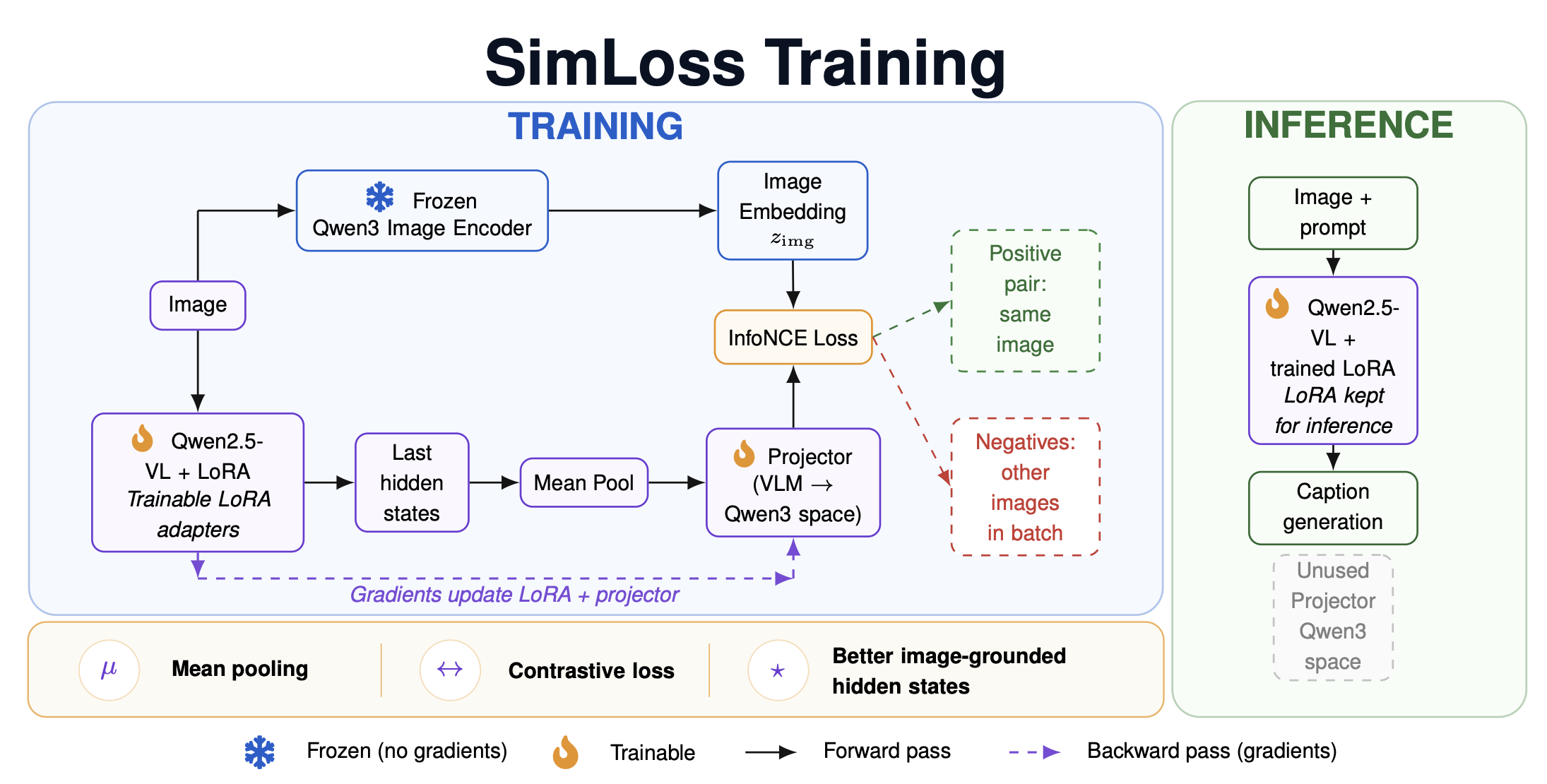
SimLoss VLA captioning
Zero-shot Fine-grained Image Captioning with VLAs
Suryaansh Jain, Rahasya Barkur, Vishal G, Ryan Rossi, Franck Dernoncourt, Jack Wang, Koustava Goswami, Nedim Lipka, Puneet Mathur, Seunghyun Yoon

A zero-shot approach to fine-grained image captioning built on vision-language-action (VLA) models, producing detailed, object-level descriptions in a single pass while matching the quality of multi-pass pipelines at a fraction of their cost and latency.

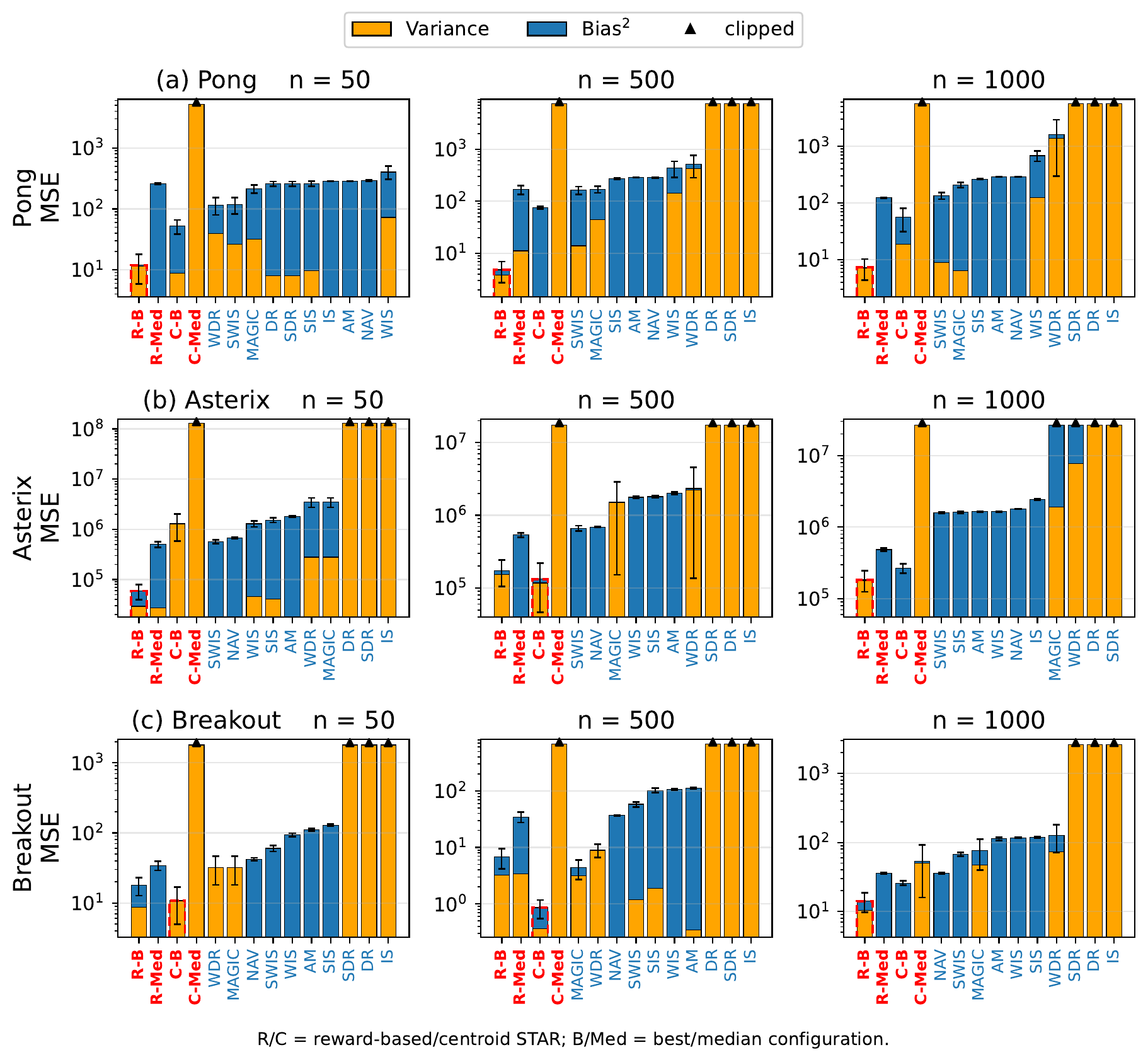
Reward-based abstractions for STAR
Fantastic φ's and Where to Find Them: Reward-Based Abstractions for STAR
Suryaansh Jain, Shreyas Chaudhari, Nikos Vlassis, Philip S. Thomas

Introduces reward-based φ-function state abstractions for the STAR estimator, enabling low-variance, low-bias off-policy evaluation that outperforms importance-sampling and model-based baselines across RL environments. Manuscript under submission; available upon request.
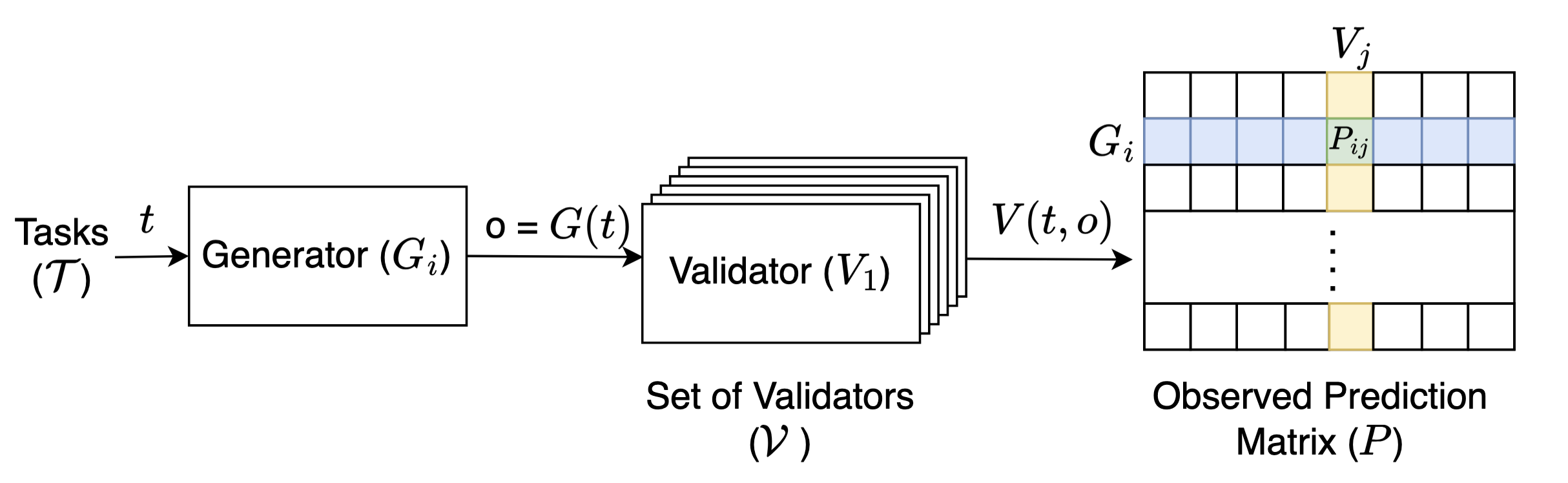
Beyond Consensus
Beyond Consensus: Mitigating the Agreeableness Bias in LLM Judge Evaluations
arXiv, 2025

We introduce an optimal minority-veto strategy that is resilient to missing data and mitigates this bias to a large extent. For scenarios requiring even higher precision, we propose a novel regression-based framework that directly models the validator bias using a small set of human-annotated ground truth data. On a challenging code feedback task over 366 high-school Python programs, our regression approach reduces the maximum absolute error to just 1.2%, achieving a 2x improvement over the best-performing ensemble of 14 state-of-the-art LLMs.

Cops and Robber
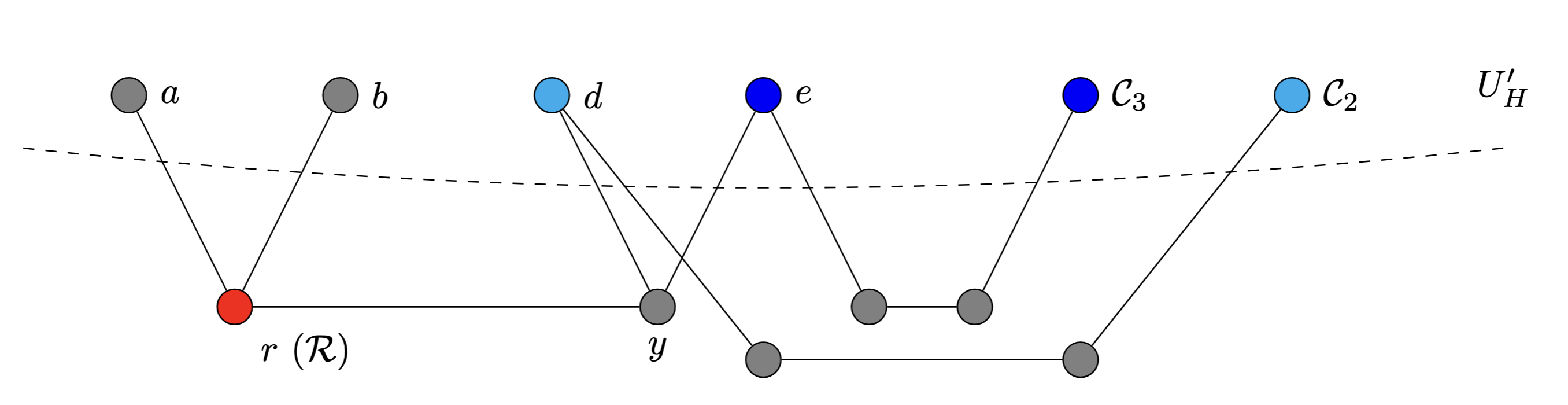
A bound for the cops and robber problem in terms of 2-component order connectivity
arXiv, 2024

Provide a bound on the cop number of graphs in terms of their 2-component order connectivity.

Hypercube
From Data Completion to Problems on Hypercubes: A Parameterized Analysis of the Independent Set Problem*
arXiv, 2024

Paper shows that fixed-parameter tractability cannot be extended to capture all FO-definable problems. It answers this question by showing that FO model checking on induced subgraphs of hypercubes is as difficult as FO model checking on general graphs.

Work Experience

Applied Materials

Machine Learning Intern

Applied Materials · SPG Team · Summer 2026 (12 weeks, ongoing) · Santa Clara, CA

  • Building time-series forecasting models for inventory prediction using Temporal Fusion Transformers and N-HiTS.
Adobe

Student Researcher

Adobe Research · Jan 2026 – present · San Jose, CA (Remote)

  • Designed an object-aware perception loss extending PAPO via YOLOv13 per-object KL terms.
  • Designed SimLoss, an information-theory-inspired loss enabling self-supervised fine-tuning of VLMs.
  • Matched the performance of multi-pass methods with a 10× improvement in cost and latency.
Crow Canyon Software

Machine Learning Intern

Crow Canyon Software · Nitro Studio AI Team · Winter 2025 (6 weeks) · Remote

  • Engineered Agentic RAG systems with LangGraph, using custom agent workflows and PDF-based knowledge retrieval to build customer-support chatbots for Nitro Help Desk.
  • Built and benchmarked multiple RAG pipelines (LangChain, LangGraph, and a custom orchestration framework) to improve retrieval accuracy and response quality.
Bryt Schools

ML & Software Engineering Intern

Bryt Schools · Tutor Development Team · Summer 2025 (10 weeks) · Remote

  • Shipped an LLM-powered conversational chatbot covering fine-tuning, evaluation, and production deployment across 100+ files.
  • Implemented section-name aliasing and coordinated staged production rollouts.
NUS

Visiting Researcher — LLM-Judge Bias

National University of Singapore · May 2024 – Oct 2025 · Singapore

  • Quantified agreeableness bias across 14 SOTA LLMs (~96% TPR / <25% TNR on 366 Python programs) under Prof. Ben Leong.
  • Proposed a minority-veto + regression-calibration method, reducing maximum error to 1.2% (2× over the best ensemble).